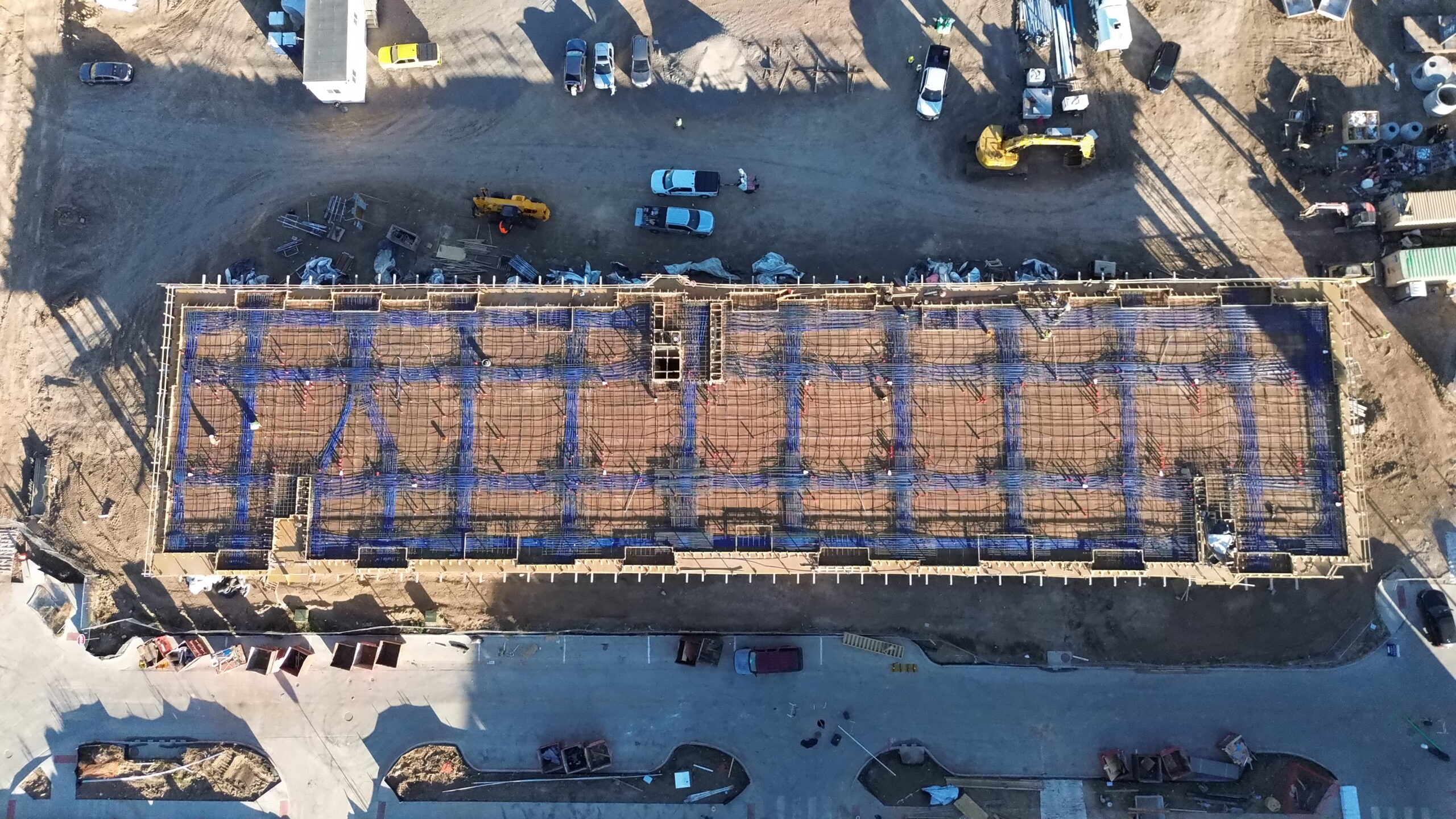
Post Tension systems

Post Tension Systemsfrom layout to stressing records

Post-tensioning is unforgiving in a specific way: almost everything that determines whether the system works happens before the concrete goes in, and none of it is visible afterward. A tendon off its profile or a sleeve cut in after placement never shows on the surface, it shows in the elongation numbers on stressing day, when the schedule has no room left for it. So we treat the post-tension package as one continuous responsibility. Baker Concrete Solutions handles PT layout coordination, tendon and anchorage placement, penetration coordination, the pour, stressing, grouting, and the records that go back to the engineer of record. We build post-tensioned elevated slabs, podium decks, parking structures, transfer beams, and slabs-on-ground throughout Colorado, often from design-assist forward, because early input on post-tensioning reliably takes money out of a structure rather than adding it.

Where Post-Tensioning Earns its Place

Post-tensioning is not the answer to every structure, and we will say so when it's not. Where it does earn its place, it earns it decisively:

•       Longer spans with fewer columns, more usable floor plate, more parking stalls per level, more leasable area from the same footprint.

•       Thinner slabs, which compounds: less concrete, less reinforcing, lower floor-to-floor heights, and in a multi-story building, sometimes an entire additional level under the same height limit.

•       Better crack control and deflection performance, because the slab is in compression rather than waiting to crack before the steel engages.

•       Stiffer, more tolerant slabs-on-ground over the expansive soils that show up across the Front Range.

•       Lower dead load carried down through the structure, which reaches all the way to the foundations and the piers.