
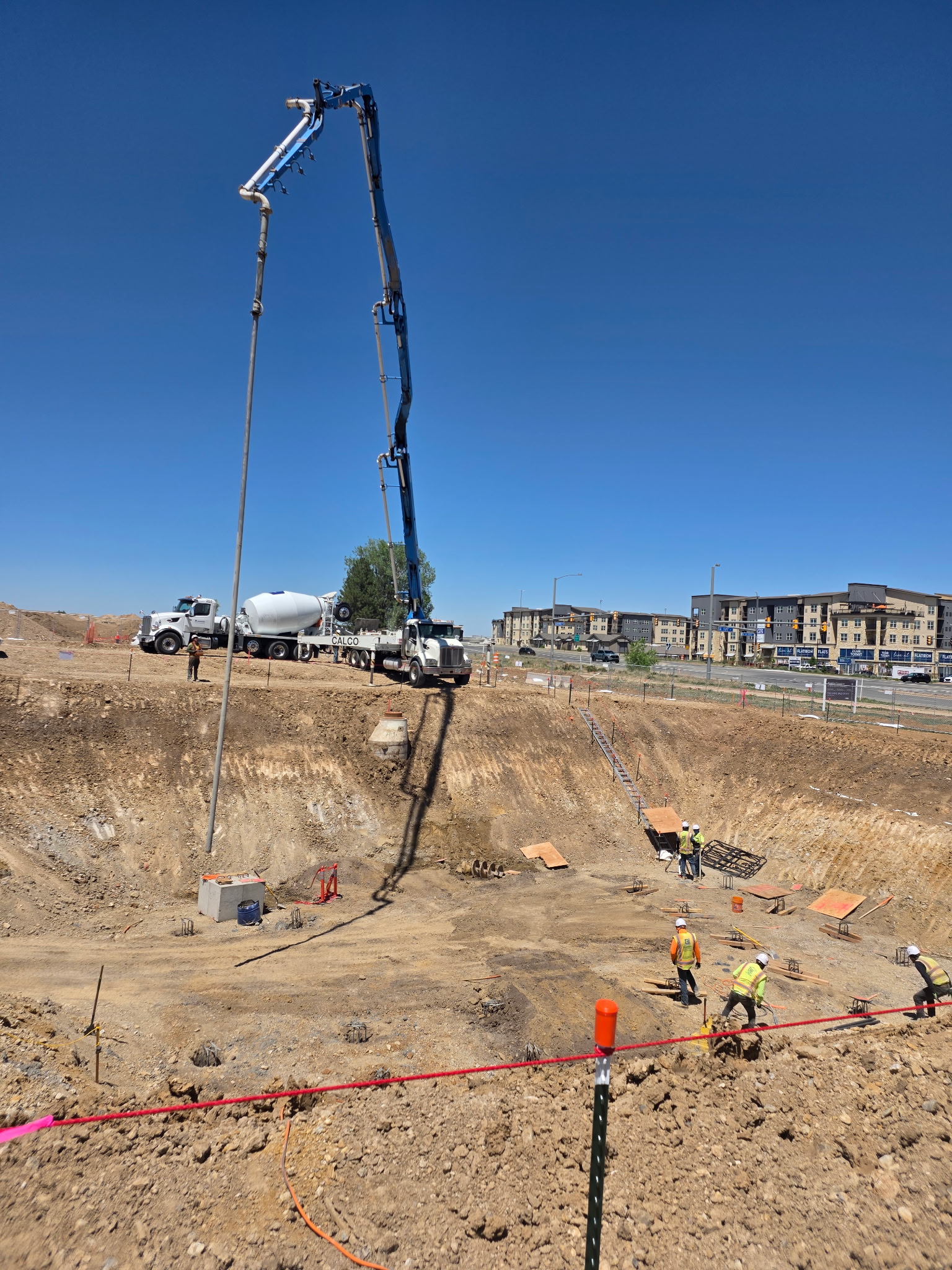
Much of the Front Range sits on expansive claystone and bentonite that swells when it takes on water and shrinks when it dries. Shallow footings on that ground move, and buildings move with them. Drilled piers solve it by going past the active zone and transferring load into competent bearing below, friction in a bedrock socket, end bearing, or both.That is why piers and grade beams are the default commercial foundation across so much of Colorado, and why the geotechnical report drives everything: pier diameter, depth, bearing criteria, reinforcing, and how much void space the structure needs underneath it to stay clear of heave.
• Straight-shaft friction piers socketed into bedrock
• End-bearing piers to competent material
• Belled and underreamed piers where the design calls for added bearing area
• Cased piers through caving soils, fill, and groundwater
• Rock-socket piers in hard bearing strata
• Wet-hole piers placed by tremie where groundwater cannot be dewatered